Astrologer Philip Heaton.
astrologerphilipheaton@gmail.com
(+44) 07955 083773

Astrologer Philip Heaton.
astrologerphilipheaton@gmail.com
(+44) 07955 083773
A Six Module Course in the Techniques of Chart Interpretation with Philip. (A course designed around you, see below for flexible scheduling and online delivery)
2026 Course Fee. £395
Interpreting the Chart as a Whole.
A practical follow on course for students who have completed an introductory study of astrology, and are ready to move beyond indentifying individual components, towards interpreting the chart as a whole.
The course is designed to develop confidence in looking at a calculated chart, recognising its most significant features and learning how to make useful notes from the overall patterns. Throughout the course the emphasis is on practise, observation and note taking. Students are encouraged to look at actual charts and develop their own process, learned from the modules, to approach interpretation. A natural progression from absolute beginner.
It is also useful for astrologers who would like to revisit, practise and develop their techniques of chart interpretation.
Flexible Study.
The Days. Sessions can be arranged to suit your availability.
The Times. Morning, Afternoon or evening sessions.
The Pace. Modules can be completed at a pace to suit your needs.
Method of delivery. Online tuition using your preferred platform. Zoom, Teams WhatsApp etc.
Payment Details. Provided after e mail confirmation of acceptance onto the course.
Not every planet in the birth chart carries equal emphasis. This module looks at the particular positions and conditions that can give a planet increased or decreased importance within the chart. We explore Planets Rising, Planets on the MC/IC, Most aspected or un-aspected. Retrograde motion and all other significant factors in determining the strength of influence before interpretation.

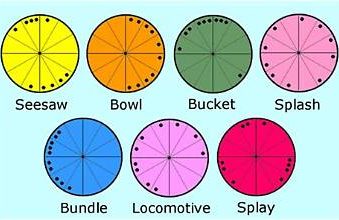
The overall distribution of the planets can create recognisable patterns within the chart. Using the chart shaping work associated with Marc Edmund Jones we explore the principle patterns including, The Locomotive, The Splay, The Bundle, The Bowl,The See Saw etc. We look at how these overall patterns are identified, what they suggest about the way a chart operates and how they can contribute to an understanding of a personality and approach to life.
Individual aspects are important, but sometimes several aspects combine to create a much larger and complex pattern. This module examines the major aspect patterns including. T Squares, Grand Trines, Grand Crosses, Yods and Other significant formations. We look at how these patterns are worked out and identified, their internal complexity and most importantly what to look for when you encounter one in a chart. The emphasis is on going beyond simply naming the aspect apttern to understanding how its different components work togethr

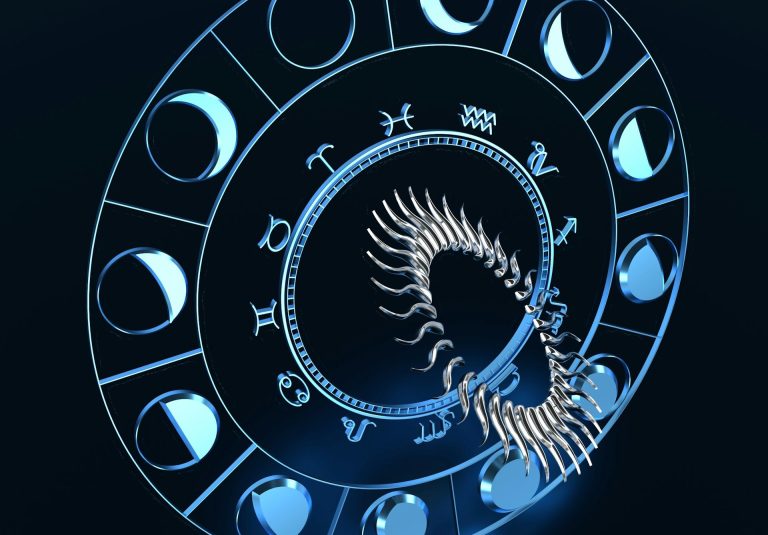
The Moons relationship to the Sun provides another very important layer within the birth chart. We explore the stages of the Waxing and Waning Moon and how the particular phase at birth can add more to the understandingof, the emotional personality and the way the individual approaches experiences. The Moon phase is considered alongside the Moons sign and house position etc; rather than in isolation, as it can often provide another but contradictory dimension in chart interpretation.
There are many additional points and cosmic bodies that can be incorporated into an astrological chart to provide further information and depth. This module introduces the possibilities of working with additional factors including; The Nodes of the Moon, Asteroids (including Chiron) Fixed Stars and other additional points. The emphasis is on understanding when and why additional cahrt factors may be useful, rather than simply adding more and more material t the chart wheel.

The Techniques of Forecasting, an introduction. The Final module provides an introduction to looking beyond the natal chart and considering how astrological techniques can be used to explore periods of change and development. We introduce Transits, Progressions and Directions. We look at how these techniques are constructed, what they represent, how they are placed onto the details of the natal chart and how they can begin to be interpreted. This will provide the principles of Forecasting Astrology and gives the student a foundation from which further study and practise can develop.
We need your consent to load the translations
We use a third-party service to translate the website content that may collect data about your activity. Please review the details in the privacy policy and accept the service to view the translations.